King's College London
Digital Design
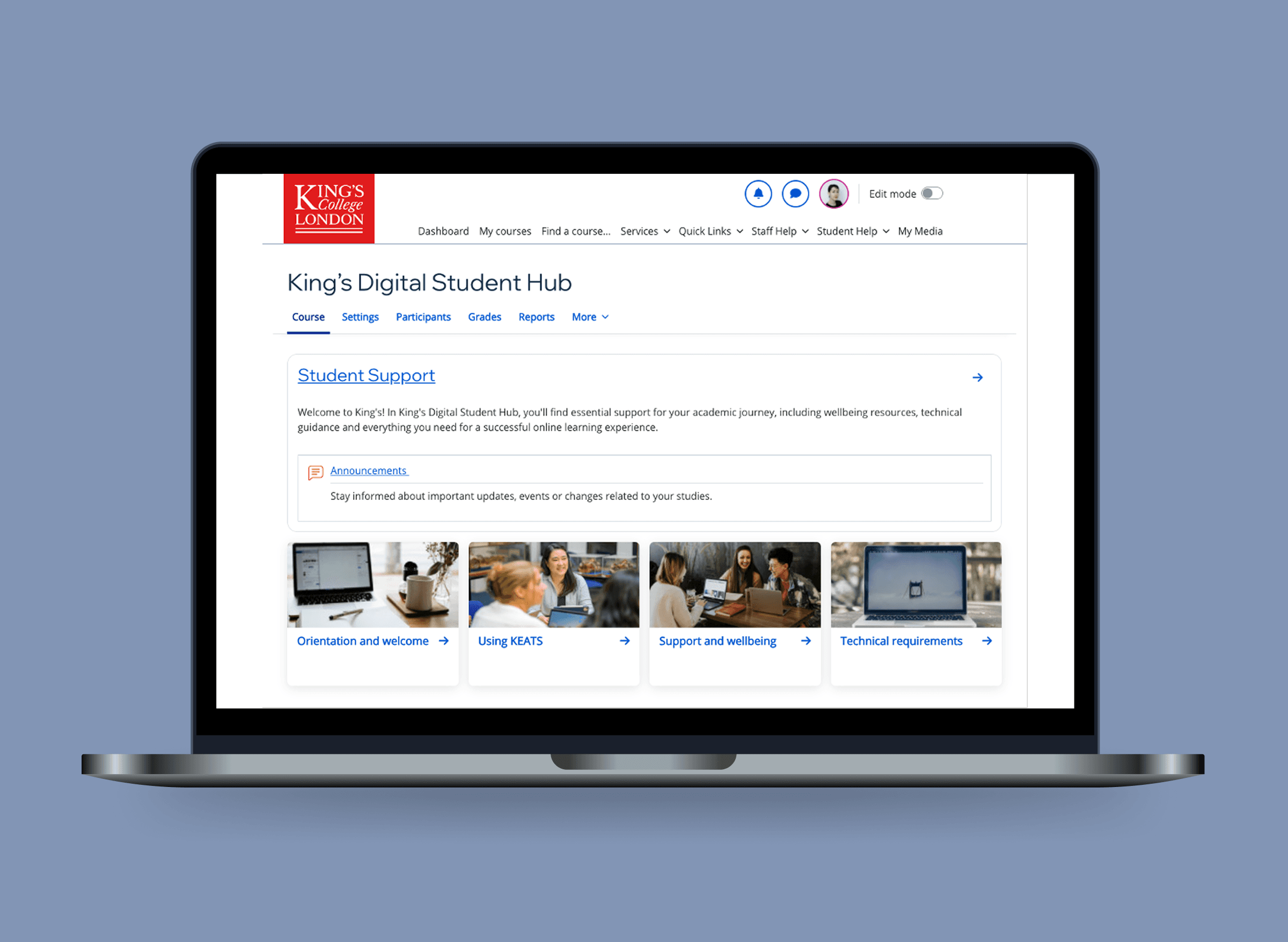
Student Hub was created in 2020 as a centralised resource for students on King’s E-learning and Teaching Service (KEATS); over time, its content grew outdated alongside system upgrades and Student Hub lost its status as evergreen guidance material.
In this project, we designed and evaluated Student Hub on KEATS, including new content and visual elements to support learning experiences. We also involved new activities and resources to encourage platform adoption.
Research
First, we conducted a user experience (UX) audit of Student Hub by reviewing its content and noting areas needing refinement. Partnering with our UX researcher, we learned that despite available resources, there’s no real onboarding experience to demonstrate to students the accessible support. Specifically, how to use KEATS effectively and foster a sense of community throughout their studies.
We wanted data to show what students expect from Student Hub, so we created a survey to a sample of 111 King’s Digital students, and together with previous qualitative research by way of interviews, informed our findings that students lacked a cohesive environment to access learning resources and onboarding support on KEATS.
Competitive analysis
Alongside preliminary research, we conducted a competitive analysis to determine what other university platforms were doing well with onboarding experiences for new students and where they could improve.
Examples of key findings included: most competitors promote ongoing events; however, these are mainly in-person and don't support online students (3/4), some competitors have a chat feature where students can meet with each other online to discuss various topics (2/4), and all competitors include various wellbeing resources as part of online student support initiatives (4/4).
Design
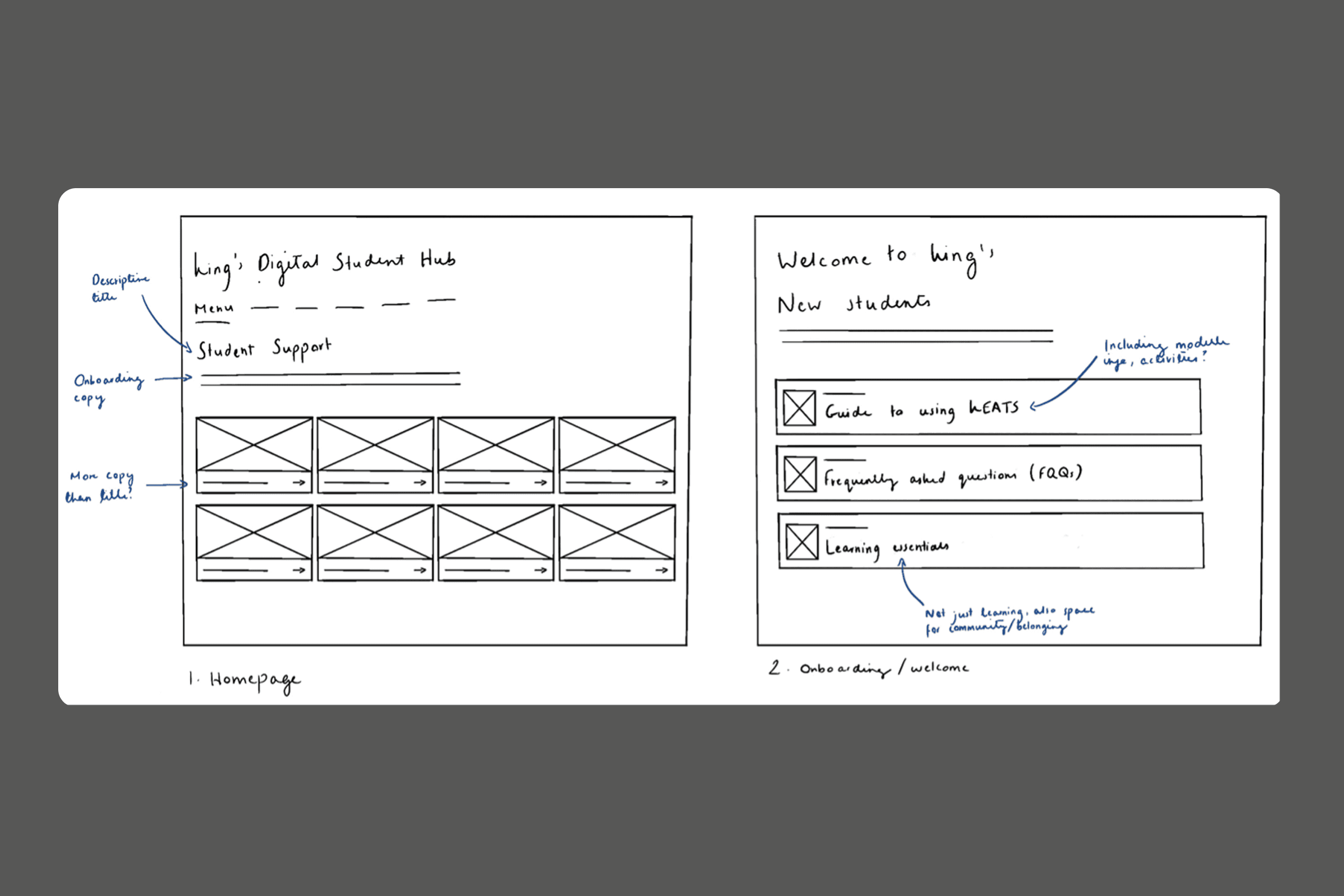
Motivated by our findings, we focused on interaction design by creating low-fidelity sketches as an opportunity to collaborate with other teams at King’s. The first prototype was on KEATS and aligning with our onboarding experience objective, we kept to creating a cohesive environment to house diverse and relevant content for students.
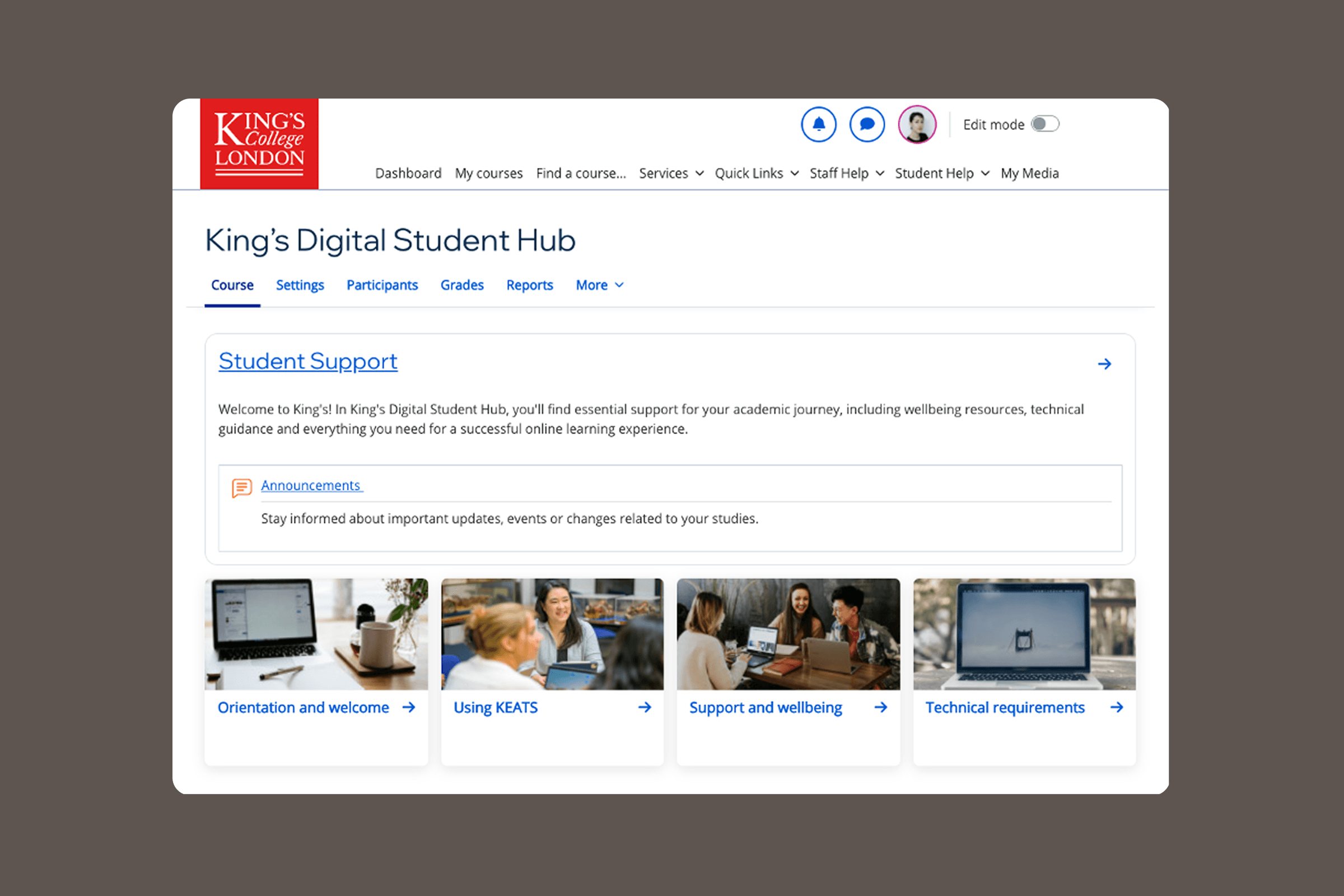
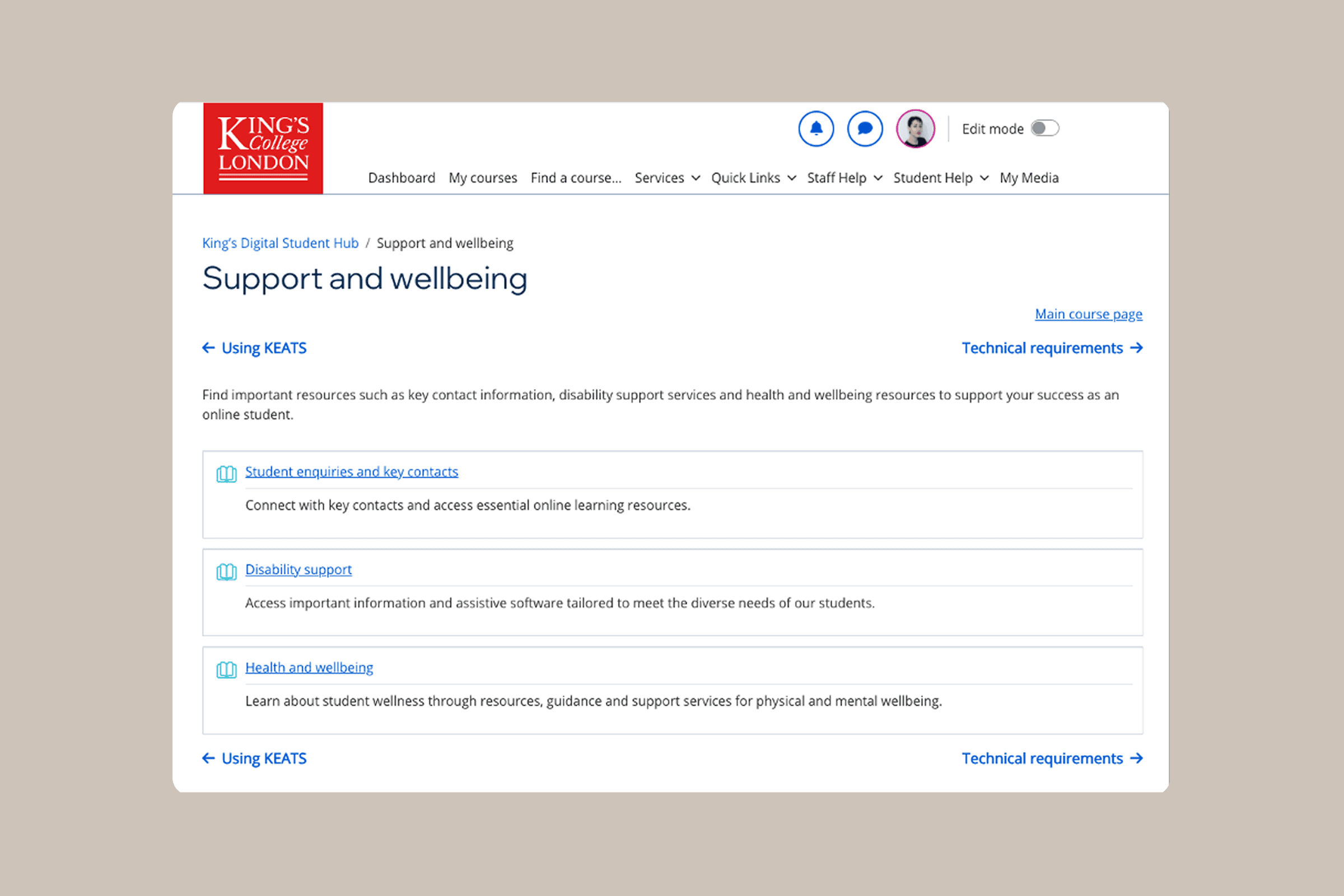
Notably, we added an orientation and welcome section, resources on navigating KEATS, guidance around student support and wellbeing, and technical assistance. Presenting the work to our UX/Dev team and Production team, feedback indicated more content surrounding community growth, to which we amended relevant pages to include a friendlier and more approachable tone.
Usability testing
To test our ideas, we sourced 5 King’s Digital students enrolled in diverse online courses who had a range of experience using KEATS (from being a relatively new student to a student who’s completed numerous modules) and used Microsoft Teams to conduct remote usability tests.
Students interacted with a high-fidelity prototype on KEATS, including critical pages and activities that aimed to support student onboarding. We enrolled students into Student Hub so they can interact with the environment using their King’s accounts.
Key findings included: all participants (5/5) understood each module title and found these generally met expectations, specifically, Support and wellbeing and Technical requirements. Most participants (4/5) understood the purpose of “King’s Resources” but found the links unclear, all participants (5/5) found Support and wellbeing positive and representative, and all participants (5/5) found Technical requirements useful, however, there were questions about repetitive or lengthy content.
Solution
Through various iterations we identified and implemented action items from our insights: by clarifying activity titles to align with student expectations, grouped and labelled links under “King’s Resources”, now simply “Resources”, more effectively to improve clarity, added more visual elements across activities to support visual scanning, and simplified technical content to aid digestibility.
On launch, Student Hub engaged 126 users, offering a central space for learning and connection, with standout interest in activities that prioritised community support and learning essentials. Behavioural data showed strong initial engagement, with new users (119) outpacing returning ones (113), and active users exploring an average of 12.5 pages per session over 6.5 minutes. Opportunities to foster sustained engagement remain, where these insights inspire future strategies to enhance interaction, boost retention, and optimise mobile experiences.
Client
King's College London
Sector
Education
Discipline
Interaction Design
Product Strategy
UX Design